Programs JEVS Care at Home About Support JEVS

Meet Our Team: Judy Emmons, Senior Vice President of Home Care Services, JEVS Care at Home  

By: Thomas H.

Judy Emmons has a rich background in public health and community service.  As Senior Vice President of Home Care Services at JEVS Care at Home, she shared her experience in nonprofit healthcare, her dedication to helping underserved populations, and her creative ideas for improving home care services. 

1. Please tell us a bit about your professional background and how you came to JCAH? 

I’ve always been interested in working with underserved populations and improving the social determinants of health in various communities. I have a bachelor’s degree in Spanish and Latin American Studies from Rutgers University, and a master’s degree in public health from Drexel University.  My first job out of college was in Camden, NJ, at a non-profit called Puerto Rican Unity for Progress, where I ran afterschool programming for at-risk teens. It was one of my favorite jobs, and I still keep in touch with some of the teens from my time there. They are now adults, and it’s amazing to see all of the wonderful things they are doing and the people they’ve become.  Prior to joining JEVS Human Services, I worked at Congreso de Latinos Unidos, Inc. (Congreso) for twelve years, where I served in various roles, including Director of Primary Care and Vice President of Healthcare Services.  My roles focused on overseeing the agency’s Federally Qualified Health Center and HIV/AIDS department, as well as the implementation of an on-site pharmacy.  During my time at Congreso, I met many colleagues who are currently serving in roles here at JEVS, which is how I learned about the great work being done at JEVS.  I decided to join the JEVS Care at Home team in January 2024, and it’s been a wonderful experience so far. We have an amazing team of administrative staff who are very committed to the clients we serve, plus so many dedicated caregivers doing this important work every day.   

2. What do you do in your role as Senior VP for Home Care Services? 

In my role as Senior VP for Home Care Services, I oversee both our Personal Assistance Services in Pennsylvania for JEVS Care at Home and our self-directed homecare model in the Financial Management Services department of JEVS Human Services.  My role supports both leadership teams to align with our agency’s strategic priorities and goals, including implementing quality assurance and compliance projects, overseeing operations, developing successful teams, and managing our financial health and sustainability.  I’m also responsible for guiding our division to new opportunities, including new services and geographic expansion.   

3. What aspect of your work do you find most fulfilling? 

I enjoy program design and finding solutions to barriers through the use of human-centered design (HCD) practices.  I have been working with my team over the past year to utilize some basic HCD approaches, including development of Minimum Viable Products (MVPs), personas, and build-measure-learn feedback loops.  The Human Centered Design approach is something that I find very helpful in planning and approaching challenges, both big and small.  I am currently working with our Health and Education and Quality Assurance teams to implement or improve various value-based care initiatives at JEVS Care at Home, including addressing gaps in care and preventing client re-hospitalizations.   

4. How would you explain “The JCAH Difference” to a potential client or partner organization? 

JEVS Care at Home has the advantage of being a part of JEVS Human Services, which allows us access to a multitude of resources and programming for our clients and caregiver staff, including opportunities for career and technical education.  We also offer our caregivers professional development, such as CPR training, Mental Health First Aid certification, and Dementia Capable Care, through our Nursing and Education department.  These trainings help our caregivers better support the clients they serve, and also develop new skills for their own development.  Additionally, we’ve recently added resources and staff to our team to help our clients navigate various systems and address barriers to care, with the intention of improving the social determinants of health in the client population we serve.   

 5. What do you enjoy doing when you’re not working? 

I have a toddler who is almost three years old, so right now I enjoy exploring and learning about the world through her eyes.  We enjoy going to the zoo, the aquarium, amusement parks, and playgrounds, and she’s just starting to speak in full sentences and ask questions, so it’s really interesting, and sometimes funny, to hear her impression of things she is seeing for the first time.  She recently got to feed a giraffe at the zoo. I was afraid she’d be scared, but she giggled the entire time.  When I’m not doing toddler things, I’m a big fan of visiting museums; my favorite local museum is The Barnes Foundation, and my two favorite museums that I have been to are the Reina Sofia National Museum of Art in Madrid and the Louvre in Paris.   

 6. If you could acquire a superpower, what would it be? 

If I could have any superpower, it would be the ability to time travel.  I’d love to see both the past and the future of our world, and visit important times in our history, and personally, I’d like to be able to go back and re-visit certain times or people in my life, especially as my daughter keeps getting older.   

 7. Tell us one the things you love the most about Philadelphia. 

The thing I love most about Philadelphia is our diversity, and opportunities to learn about other cultures.  I recently took my daughter to the Dia de Los Muertos celebration in the Italian Market, where she got to see first-hand this tradition from the Mexican culture – we had so much fun seeing the art and imagery associated with the holiday, listening to the music, and trying new food.  We also love the Chinese Lantern Festival at Franklin Square, especially at nighttime when all of the huge installations are glowing, surrounded by traditional Chinese music and performers.  Another favorite of mine is Taller Puertorriqueño, an arts and culture center in North Philadelphia that features art and literature from Philadelphia and Puerto Rican born artists.  No matter where you go in Philly, you are always surrounded by culture and history, and there is always a celebration or festival to explore.   
Hundreds Attend Orleans Technical College’s 50th Anniversary Graduation Ceremony for Healthcare and Trades Graduates

Orleans Technical College celebrates its largest graduating class, marking a milestone in its 50-year history with graduates achieving certifications in healthcare and skilled trades.

(Philadelphia, PA) — Orleans Technical College, a program of JEVS Human Services (JEVS), celebrated the accomplishments of 254 graduates from its healthcare and trades programs on Thursday, November 21. Nearly 1,000 family members, supporters, and Orleans Technical College staff packed the Philadelphia Ballroom for the evening of inspiration. 

The ceremony made history with the college’s first graduating class from the Clinical Medical Assistant (CMA) program, marking an exciting milestone in Orleans Technical College’s 50 years. The 11 graduates received a 100 percent certification rate after completing their classroom and laboratory education. They have all been offered employment through Orleans Technical College employer partners: Jefferson Einstein, Temple Health, and Penn Medicine. “My main goal is to let my kids know, no matter how far behind you are—you can do it,” said Shaquanna Patterson Jordan, CMA Class of 2024. “I’m not stopping here! My next goal is to become an LPN or RN…This is only the beginning!” 

The event also honored the dedication and achievements of students who have completed training and certifications in high-demand fields like carpentry, electricity, HVAC, and plumbing. Jose Aguirre, Senior Manager of Local Government Affairs at PECO, addressed the importance of strong partnerships which help connect graduates to career opportunities. “At PECO, we are dedicated to serving communities. That’s part of why we are so proud to be an employer partner for Orleans Technical College,” said Aguirre. “A strong workforce raises all tides.” He pointed to how the company has hired many Orleans Technical College graduates over the years who have gone on to have meaningful careers, underscoring the college’s commitment to providing life-changing opportunities. More than half of Orleans Technical College graduates represent the lowest-income zip codes in Philadelphia. Earning certifications in skilled trades has empowered the lives and futures of these individuals and their families.   

Diplomas were awarded by Orleans Technical College’s leadership. The celebration included 28 participants from JEVS Project WOW  who earned their high school diplomas as well as property maintenance and repair certificates. “You all represent the future!” said Waleska Maldonado, JEVS Chief Program Officer. “You are tomorrow’s essential workers that will keep our city, country, and society functioning—and healthy!”  

ABOUT  

JEVS Human Services (JEVS) has an 80+ year history in working with individuals to create sustainable paths to independence and economic security. JEVS’ vision is to help every person achieve personal independence and fulfillment. Our mission and vision reflect JEVS’ long-standing history of helping people connect to opportunity and cultivate independence.

Orleans Technical College, operated by JEVS Human Services, is an accredited, non-profit career training school. It prepares adults for careers in building trades and healthcare. Since 1974, Orleans Technical College has helped students move toward one common goal: learning new skills to enhance their success in the workforce. Orleans Technical College offers job training programs in building trades and healthcare. 

Empowering Youth: Ecuadorian Leaders Visit to Learn from C2L-PHL Program 

By: Rossella A.

JEVS Human Services and our Career Connected Learning Philadelphia (C2L-PHL) team were excited to host a group of community leaders from Ecuador. They came to learn how we help youth explore careers and gain important skills. These guests are part of a program run by the U.S. Department of State, which connects leaders from around the world to share ideas and learn from each other. 

Ecuador has made great progress in helping young people, and this visit gave both countries a chance to share ideas on how to help youth find jobs, especially those who need support after facing tough times. Youth programs are important because they offer education, training, and work experience they need to rebuild their lives. 

The C2L-PHL program provides paid opportunities for youth in Philadelphia. It is a partnership with the City of Philadelphia, Philadelphia Works, and the School District of Philadelphia. It helps teens and young adults learn about different jobs, develop important job skills, and discover their strengths and interests. 

Programs like C2L-PHL offer mentoring, skill-building, and hands-on work experiences to help participants shape a successful future. C2L-PHL also teaches financial literacy, helping them learn to manage money as they prepare for their career. 

Our dialogue with the Ecuadorian delegation showed how important it is, worldwide, to give young people safe spaces, strong support, and real work opportunities. We are grateful to the World Affairs Council of Philadelphia for helping us make this connection. By learning from each other, we can strengthen efforts to help the next generation overcome challenges and contribute to their communities.  

Empoderando a la Juventud: Visita de Líderes Ecuatorianos para Aprender del Programa C2L-PHL

JEVS Human Services y nuestro equipo de Career Connected Learning Philadelphia (C2L-PHL) estuvieron emocionados de recibir a un grupo de líderes de la comunidad Ecuatoriana. Ellos vinieron a aprender cómo ayudamos a los jóvenes a explorar carreras y desarrollar habilidades importantes. Esta comisión es parte de un programa del U.S. Department of State, que conecta a líderes de todo el mundo para compartir ideas y aprender unos de otros. 

Ecuador ha hecho grandes avances en apoyar a los jóvenes, y esta visita permitió que ambos países compartieran ideas sobre cómo ayudar a los jóvenes a encontrar empleo, especialmente aquellos que necesitan apoyo después de pasar por momentos difíciles. Los programas juveniles son importantes porque ofrecen la educación, capacitación y experiencia laboral que ellos necesitan para reconstruir sus vidas. 

El Programa de Empleo Juvenil C2L-PHL es una colaboración con la Ciudad de Filadelfia, Philadelphia Works y el Distrito Escolar de Filadelfia, que ayuda a adolescentes y adultos jóvenes a conocer diferentes trabajos, desarrollar habilidades laborales importantes y descubrir sus fortalezas e intereses. 

Programas como C2L-PHL ofrecen mentoría, desarrollo de habilidades y experiencias laborales prácticas para enfocar a los participantes a construir un futuro exitoso. C2L-PHL también enseña educación financiera, educándolos en el manejo del dinero mientras se preparan para sus carreras. 

Nuestra colaboración con la delegación Ecuatoriana muestra la importancia, a nivel mundial, de brindar a los jóvenes espacios seguros, apoyo sólido y oportunidades reales de trabajo. Estamos agradecidos al World Affairs Council de Filadelfia por ayudarnos a crear esta conexión. Al aprender unos de otros, podemos fortalecer los esfuerzos para ayudar a la próxima generación a superar desafíos y contribuir a sus comunidades. 


Diabetes Guide for Caregivers | Types, Symptoms & Tips for Early Detection

by Thomas H. and Nurse Kim

This guide is for informational and educational purposes only. It does not constitute medical advice.

Diabetes: A Quick Guide for Caregivers 

Diabetes is a condition where the body can’t make or use insulin correctly. Insulin helps control blood sugar levels, and without it, blood sugar can get too high.

It’s important for caregivers to know about the prevalence of diabetes and learn to recognize symptoms. According to the American Diabetes Association, 38.4. million Americans, or 11.6% of the population, had diabetes in 2021. The ADA estimates that 8.7 million of those people were undiagnosed. Also, the prevalence of diabetes among people 65 and older is high, at 29.2%, or 16.5 million seniors. This includes both diagnosed and undiagnosed individuals. [SOURCE: Statistics About Diabetes | ADA]

Two Types of Diabetes

In type 1 diabetes, the body doesn’t make insulin. The immune system mistakenly attacks cells in the pancreas that produce insulin. This type is usually diagnosed in children or young adults, but it can appear at any age. People with type 1 diabetes need daily insulin to stay healthy.

In type 2 diabetes, the body doesn’t make or use insulin properly. This type is more common in middle-aged and older adults, although it can develop at any age. Type 2 diabetes is the most common form of diabetes. [SOURCE: Diabetes Basics | Diabetes | CDC]

Symptoms of Diabetes

Both types of diabetes share some symptoms. In Type 1 diabetes, symptoms often start quickly and are more severe. Common symptoms of diabetes include:

  • Hunger and Fatigue: The body uses insulin to help cells absorb glucose for energy. Without enough insulin or when cells resist insulin, glucose can’t enter the cells. This causes fatigue and hunger.
  • Frequent Urination and Thirst: People with diabetes may need to urinate more often because high blood sugar causes the kidneys to produce more urine, which can lead to dehydration and thirst.
  • Dry Mouth and Itchy Skin: When the body uses more fluids to make urine, less moisture is available elsewhere, leading to dry mouth and itchy skin.
  • Blurred Vision: Changing fluid levels can affect the eyes, making it hard to focus.
  • Slow-Healing Sores or Cuts: High blood sugar can damage blood flow and nerves, slowing down healing.
  • Pain or Numbness in Feet or Legs: Nerve damage from high blood sugar can cause pain or numbness, especially in the feet and legs. [SOURCE: https://www.cdc.gov/diabetes/signs-symptoms/index.html SOURCE: https://my.clevelandclinic.org/health/diseases/7104-diabetes]

Diagnosis and Early Action

The best way to manage diabetes is through early and accurate diagnosis. Anyone experiencing the above symptoms should talk with their doctor.

Help from JEVS Care at Home

JEVS Care at Home helps seniors and adults with disabilities live fully and independently at home. For more information about our services, contact us today: https://www.jevshumanservices.org/jevs-care-at-home-form/

C2L-PHL Behind the Scenes: Abigail’s Experience 

One of our C2L-PHL providers this summer was We Love Philly. This program offered opportunities for twenty-five high school aged youth in West Philadelphia. Among them was Abigail, who offers this first-hand account of her summer experience:

My name is Abigail and I live in Southwest Philadelphia. I’m a 15-year-old rising Sophomore at a local public school. This summer, I participated in C2L-PHL with WeLovePhilly to learn about digital marketing and social media management. 

This is the second year I have participated in WeLovePhilly’s summer program. I was connected to the opportunity at WeLovePhilly through someone I knew from participating in the Big Brothers Big Sisters of America program. 

I worked alongside five other students all summer and had a lot of fun meeting and learning with them and our teacher. I enjoyed the fact that we moved around a lot and met in different places such as REC Philly, Industrious, or Capital One Cafe. 

Through this summer program, I learned how to better speak up for myself and voice my opinions. WeLovePhilly teachers always encourage us to share our perspectives, which has made it easier for me to do in other places.

I also learned and practiced taking SEPTA. Traveling to WeLovePhilly each day has made me more confident in taking the train or bus.

I’m not sure what career path I want to take yet, but I would consider digital marketing. It is a good career for introverts who like to socialize, but not too much. 

The C2L-PHL program is great for young people like me because we get to learn, stay busy, and earn money during the summer. I’m excited to participate next year!

Hispanic Media Honors Cynthia F. Figueroa at the Hispanic Heritage Month Gala

The Hispanic Heritage Month Gala was a vibrant celebration of Latino heritage in Philadelphia. The event recognized Cynthia Figueroa, President and CEO of JEVS Human Services, along with other notable figures. PECO was honored with the Corporate of the Year award for its significant contributions to the Latino community. The evening included speeches from local officials and culminated in lively musical performances, creating a strong sense of community spirit.

Click here to read the full article.

JEVS Human Services recognized over 40 providers in its Career Connected Learning program

After a successful summer of programming, the JEVS Career Connected Learning Philadelphia (C2L-PHL) team took time to celebrate the team of program providers, system partners, JEVS staff, and more, who came together to provide paid work opportunities to over 7,000 Philadelphia youth this summer. JEVS President & CEO Cynthia Figueroa, JEVS Senior Vice President of Intermediary Services Kimberly McCaffrey, and Co-Executive Director the program Beyond the Bars Matthew Kerr, spoke to KYW about the impact of C2L-PHL.


Meet Our Team: Sherrie Durr, Director of Client Care, Southwestern PA Office 

By Thomas H. 

Director of Client Care for our Southwestern Pennsylvania office in Pittsburgh, Sherrie Durr began her career in home care as a caregiver. Sherrie shared with us recently about her path to JEVS Care at Home, her role in delivering client care, and a fun fact about Pittsburgh that all Pennsylvanians should know.  

1. Tell Us about your professional background and how you came to JCAH? 

 I worked in the Health Care field for many years prior to coming into the Home Care Industry. I started in the homecare industry about 19 years ago. I was a stay-at-home mom of 5, the youngest one having Cystic Fibrosis.  We had nurses in the home to help with the youngest, which opened my eye to the home care industry. I started as a caregiver, which allowed me to work a few hours a day while the kids were in school. I grew to love the industry and after a few months became a trainer, then a supervisor. I came to JEVS Care at Home in 2019.   

2. Tell us about your responsibilities as Director of Client Care.  

I manage our Home Care and HAB Division in the Southwestern Pennsylvania area. Partnering with our senior client care managers, client care managers, and support teams to establish and maintain relationships with clients, caregivers, and referral sources to ensure that we are providing the best care to our clients.  

3. What aspect of your work do you find most fulfilling? 

I enjoy working as a team to make sure that our clients are getting the services that they need.  

4. How would you explain “The JCAH Difference” to a potential client or partner organization? 

We take the time to get to know our clients and caregivers. We make sure we meet their needs and expectations to build strong relationships throughout the time we provide services. 

5.What do you enjoy doing when you’re not working? 

I enjoy spending time on our boat, riding our RZR, and spending time with my family and friends. 

6.If you were to acquire a superpower, what would it be? 

Foresight: being able to see the outcome of potential actions before the actions are taken. 

7. Tell us something you wish other Pennsylvanians knew about Pittsburgh? 

Pittsburgh is known as The City of Bridges.  It has 446 bridges!

Frequently Asked Questions About Home Care | JEVS Care at Home

By Thomas H. 

Frequently Asked Questions about Home Care from JEVS Care at Home 

If you have never considered home care for yourself or a loved one, you probably have questions about available services, eligibility, payment options, and more. Below you’ll find the questions we hear most frequently from prospective clients and their families. If you have questions that aren’t answered here, please contact us at https://www.jevshumanservices.org/jevs-care-at-home-form/ A member of our team will be in touch! 

1. What is non-medical home care?

Non-medical home care focuses on helping clients with daily living activities such as personal care, meal preparation, light housekeeping, and companionship. Our services are provided based on an individualized Plan of Care that we create for each client. Home care services from JCAH complement any medical care a client is receiving.  


2. What services do you offer, and how will they benefit my loved one?

We offer a range of services including personal care, bathing, dressing, grooming, meal preparation, mobility assistance, medication reminders, and companionship. These services are designed based on each client’s unique needs. Services from JCAH help clients maintain their independence and improve their quality of life in their own homes. 


3. How do you ensure the quality and safety of your caregivers?

Our caregivers undergo a rigorous hiring process that includes background checks, reference checks, and comprehensive training. We also provide ongoing training and supervision, conduct regular check-ins to make sure caregivers follow each client’s Plan of Care, and we maintain open communication with clients and their families to ensure high-quality care. 


4. Are your services covered by insurance, Medicare, or Medicaid?

Non-medical home care is generally not covered by Medicare but may be covered by some private insurance plans or long-term care insurance. Qualified PA Medicaid recipients can receive services free of charge. We will help you or your loved one explore payment options, including private pay, veteran benefits, and Medicaid “waiver” programs. 


5. How do you match caregivers with clients?

We carefully match caregivers with clients based on the client’s needs, preferences, personality, and the caregiver’s skills and experience. We value compatibility and encourage feedback from families. Clients have the option to meet and approve their caregiver before services begin and can request a change if the match is not ideal. 


6. What are your rates, and how is billing handled?

Services are available at no cost to qualified Medicaid participants and eligible veterans, and we have affordable rates for those who self-pay. Rates can vary based on the level of care needed, the number of hours, and any specific services required. We provide a detailed cost breakdown and work with families to create a care plan that fits their budget. Billing is typically handled on a weekly or monthly basis, with transparent invoicing.   


7. What happens if our caregiver is sick or unavailable?

We make sure every client has a back-up plan in case their caregiver becomes ill or is unable to make a scheduled shift. We communicate any schedule changes immediately, and we’ll supply a substitute caregiver whenever possible.   


8. How flexible is your scheduling, and can care be adjusted as needs change?

Our scheduling is very flexible, allowing for care from a few hours a week to 24/7 support. Care plans can be adjusted as needs change, whether temporarily or permanently, to ensure that clients receive the appropriate level of care. 


9. What is the process for starting care, and how quickly can services begin? 

The process starts with a free consultation to assess the client’s needs and preferences. We then develop a personalized Plan of Care and match the client with a caregiver. Services can begin in as few as 48-72 hours, depending on the urgency and availability. 


10. How do you handle emergencies or situations when immediate assistance is needed?

We have an on-call system and emergency protocols in place to respond to urgent needs 24/7. Our caregivers are trained to handle various emergencies, and our on-call staff is available to provide support and coordinate care after hours and in crisis situations. 

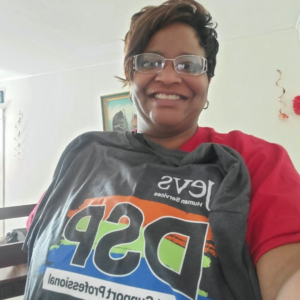
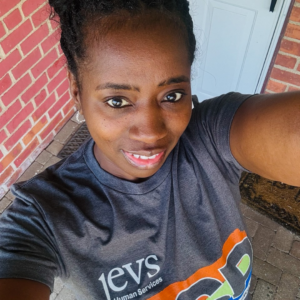
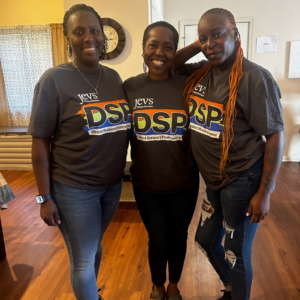
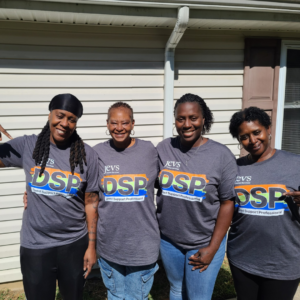
The Unmatched Dedication of JEVS Direct Support Professionals

By Erin G.

A Direct Support Professional (DSP) plays a vital role in supporting people with disabilities, both at home and in their communities. They help individuals try new activities and build social connections. DSPs make sure that healthcare needs are met, including managing doctor appointments and medications.

They offer emotional support during difficult times and encourage activities that bring happiness. DSPs assist with self-care, home management, and learning life skills. They also arrange transportation for community events, outings, and errands. For some individuals, DSPs provide support 24/7 throughout the year. Their work is essential for improving the well-being and independence of those they assist.

At JEVS, DSPs go beyond caregiving. They manage many responsibilities to support each person’s independence and ability to make their own choices and lead fulfilling lives. Many JEVS DSPs are long-standing employees whose dedication is unmatched.

Meet Temika P.

Temika is a Direct Support Professional (DSP) with a lot of experience in the industry. She has worked at JEVS for 15 years, and she and her team support a community home where three women live together.

When Temika talks about her work as a DSP, she shares stories about activities that the residents, whom she affectionately calls “her ladies”, have done. To celebrate a resident’s birthday, Temika took the resident to get her nails done. She arranged for one to visit her favorite casino accompanied by another staff member. She took them all on a special day trip to the beach and boardwalk. Temika credits her coworkers for how well they work together to cover shifts and do fun things together. She says, “We’re not just out here because we’re on the clock. My joy comes from

seeing their joy.” Temika encourages them to try different activities and makes sure they feel supported. She adds, “I consider the people I take care of my family.” Temika is a Certified Nurse Aid (CNA) and recently earned her DSP – II certification from The National Alliance for Direct Support Professionals (NADSP). A DSP certification offers more than just on-the-job training. It provides specialized education for supporting individuals with disabilities. This certification tests skills in caregiving, assistance, and promoting independence.

The most important part, Temika says, is having patience, being compassionate, and encouraging each other.

Meet Karen J.

Karen has spent a lot of time helping people with mental health and care needs. In 2018, she joined JEVS to continue helping others.

As a Direct Support Professional (DSP), Karen manages a home with three residents who receive around-the-clock care. She works hard to make sure they feel comfortable, respected, and supported. This means managing daily activities like medical appointments, meals, and housekeeping.

Karen works with residents who have different ways of communicating. Some can speak, and others cannot. She tries hard to connect with everyone and involves them in fun activities. She also helps residents learn how to do things like cleaning up after their meals or picking up their rooms. For the ones who have the ability, this encouragement helps them become more independent and feel proud of themselves.

One special moment for Karen was when she helped a resident who had trouble moving and talking. Karen set up a spa day for her, even though she wasn’t sure how the resident would react. The day was a big hit, and the resident had a great time. For Karen, it was heartwarming to see the resident’s visible joy. Karen also completed additional training and earned her DSP – III certification from The National Alliance for Direct Support Professionals (NADSP). This certification course provides more education and tests the way a DSP responds to different situations.

DSPs should care for people as they would want to be cared for themselves. Karen says, you have to be humble, you have to be patient, and you have to listen”. It’s more than showing up for a job. It’s about truly caring for and helping people. Karen’s dedication shows her compassion and desire to make a positive difference in the lives of the people she supports.

Meet Penny W.

Penny has been with JEVS since 1999 when she was hired to work with people in their homes. Throughout the years, she has held other positions and has coached residents at their jobs. She loves helping people and has worked directly in residential care for the last ten years.

Penny is a Direct Support Professional (DSP) and works with three women who receive round-the-clock care. She and other staff provide support for daily care and housekeeping needs. They also arrange for fun outings and coordinate with a day program for one of the residents.

Penny speaks Spanish, which helps her connect with the residents who are Spanish speakers. They feel more comfortable talking to her in their own language. One of the women speaks Spanish with Penny because it puts her at ease.

The job of a DSP is about more than managing daily tasks. Penny does extra things like making holidays special by decorating and cooking traditional Spanish dishes. She remembers how one resident loved to see the Christmas lights, and how everyone compliments how she decorates and organizes their home. Penny says she loves to see them happy and that “they make my heart melt.”

Penny knows that being a DSP is not for everyone. It requires someone who can support residents in a way that shows respect and compassion. She says, “in order for you to be doing this kind of job you need to have patience and love, and you need to care.”

Being a DSP is important to Penny. She finds her work very rewarding because she cares about her residents, not just the paycheck. She has also gotten to know the families of some of her residents, and she is touched when the women want to hug her or even call her when she’s not there. She says, “it means so much because I love my ladies. We have that connection.”


Want to Stay Connected with JEVS? Sign Up for Our Updates.

Sign Me Up!
Skip to content