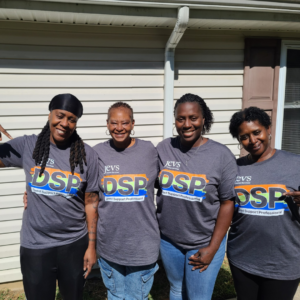
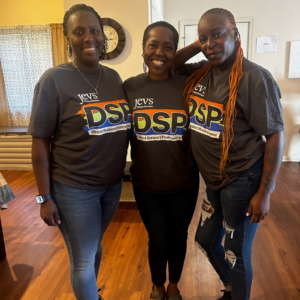
Direct Support Professionals (DSPs) play a critical role in providing whole life support for individuals with disabilities. During DSP Recognition Week, we honor the dedication, compassion, and hard work of DSPs like Joseph, who works with JEVS Community Living and Home Supports in the Philadelphia area.
Please tell us a bit about yourself.
I’ve been a DSP for three years. I was new to the field and came into it looking for a change of career after 14 years in HVAC. I’ve always liked to give back and help others, so I wanted to see where I could help people on the daily. I struck out on faith and fell in love with this job. I love what I do—the work we put in and the progress we see has truly been amazing.
Tell us about the career path that led you to be a DSP.
I started after 2023 as a floater DSP, assisting at different residential houses. A senior director asked me to come on full time because I had a good rapport, and we’ve been building since then. I was new to this field and kept learning every day. I moved up because I’m good at connecting and bonding, and I use what I learn in life to help the people I support. Now I’m a team lead. I don’t see this as just a work atmosphere—it’s more like a family.
Please tell us what you find to be the most rewarding about your work and why.
I get joy from seeing the progress people make. I started with one consumer who was really closed off—wouldn’t interact with staff or family. We worked with his mom and his therapist, set daily goals, and now he’s completely a different person. He’s able to talk with people, has a job, and uses what he’s learned in the house in the real world. It’s not always easy, but when you see the end results, it’s all worth it.
I love the one-on-one work, being able to help someone build their strengths, and seeing the work we put in pay off. I feel like I’m here to provide support, not just cleaning or cooking, but working on skills they can use in life. I love building that family atmosphere, making it feel as much like home as possible, doing things like shooting hoops, taking dinner walks, caring for their dog*, or having movie days. Watching the people I support grow and become more independent—that’s why I love my job.
*Joseph supported his clients in volunteering at animal shelters and requested approval for them to get a pet after seeing how much they enjoyed caring for animals. Now he empowers them to walk, feed, and care for their dog. It’s one of the ways he has helped them be active participants in creating a home and a place of belonging.
Can you tell us about a client or person you’ve encountered in your work who has inspired you? How were they inspiring?
One who works at a local store has been inspiring. Supporting another in reading and building skills shows how much progress someone can make when you build around their interests and incorporate goals into what they love. It’s amazing to see them get out in the community, volunteer, or just enjoy everyday things. That growth inspires me—it shows that patience and building relationships really work.
What advice do you have for someone who is considering becoming a DSP?
You have to be open to relationship building and have patience. Dive into getting to know the individual. Don’t just read the notes on paper—get to know the person for yourself. You have to be open-minded and willing to work as part of a team. Be solution-based and stay focused on the purpose—we’re here for them to make life as fulfilling as possible. This is not babysitting—they can feel when someone is genuinely there for them. Treat them as a human being.
Start building trust, give them the tools to succeed, and involve them in decisions. Everyone’s different—one person might be older, another younger; one might have family support, another none at all. You have to be willing to put in the work and be invested. You can’t see this as a job; you have to come in ready to help someone grow. Keep moving toward the goal, tackle one problem at a time, and celebrate the progress along the way.
I never see myself doing anything else. I love the one-on-one work, the relationships, and the growth I get to witness every day. This is my calling.
Learn more about being a DSP.
Interested in making a difference like Joseph? Learn more about the responsibilities and rewards of working as a DSP.