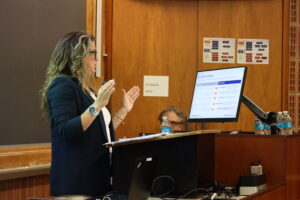
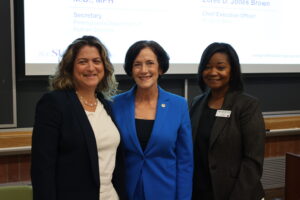
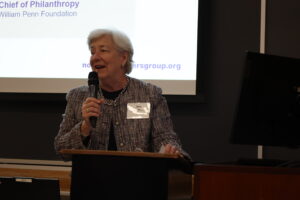
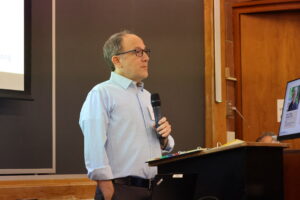
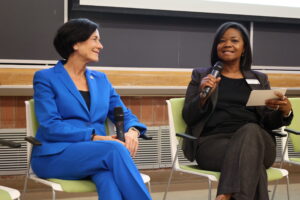
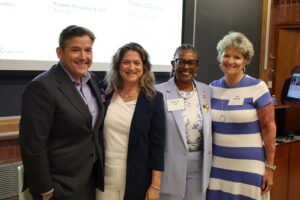
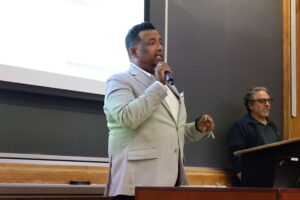
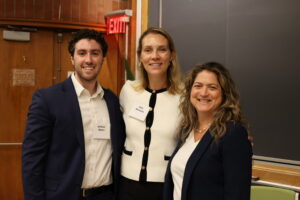
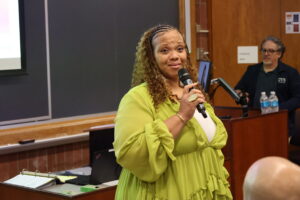
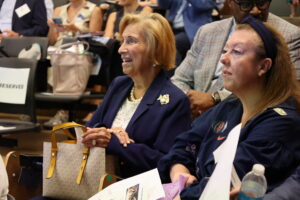
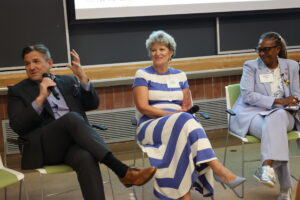
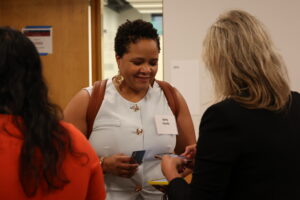
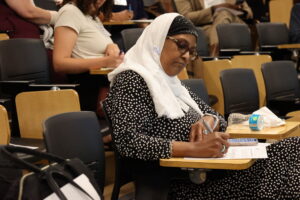
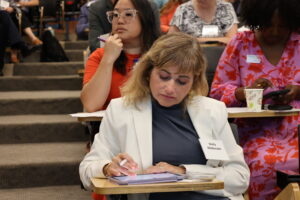
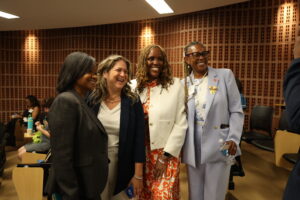
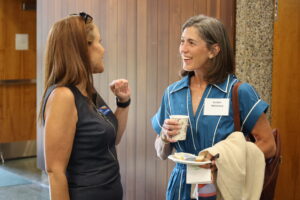
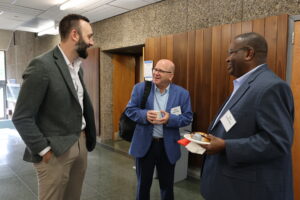
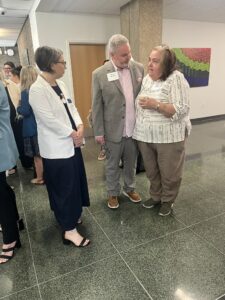
JEVS Human Services (JEVS) President and CEO Cynthia Figueroa received the Eliza Shirley Women in Leadership Award at The Salvation Army Greater Philadelphia’s Celebrate Hope Annual Luncheon 2026.
The award recognizes women who demonstrate dedication to service and community, honoring the legacy of Eliza Shirley, the young Philadelphian whose efforts helped establish The Salvation Army in the United States in 1879.
For Cynthia, the recognition was an opportunity to reflect not only on her own journey but also on the people who have shaped it. She shared a saying that her mother often said:
“Dime con quién andas y te diré quién eres.” It means, tell me who you walk with, and I’ll tell you who you are.
The message was about herself and also JEVS: meaningful work is built through relationships.
She spoke about her JEVS colleagues, as well as the leaders, mentors, and partners she has had the opportunity to walk alongside. She specifically thanked Bonnie Camarda, Divisional Director of Partnerships for The Salvation Army Eastern Pennsylvania & Delaware, and Pedro A. Ramos, President and CEO of The Philadelphia Foundation.
“Walking together is how we create solutions to today’s challenges,” Cynthia said.
Building stronger communities through partnerships
JEVS supports individuals on sustainable paths to independence and economic security, bringing together programs, people, and community partnerships to address needs across the region.
Whether someone is preparing for a new career, pursuing education and training, seeking behavioral health or home support services, JEVS’ programs provide resources that illustrate the impact of a thriving and connected community.
JEVS works with employers, educators, government agencies, community organizations, and other partners to expand access to opportunities and connect people with the resources they need to move forward.
“Walking together is how we create solutions to today’s challenges. -Cynthia Figueroa
These relationships are particularly important as communities face complex and changing needs. No single organization can do it all alone: working together allows organizations to build on their strengths, share expertise, and broaden the ways they can serve.
A Shared Commitment to Service and Community
Cynthia’s recognition by The Salvation Army of Greater Philadelphia is a reminder of the value of those connections—and of the people who choose to walk alongside one another in service to their communities.
Partnership has always been central to how JEVS works. Learn more about JEVS’ programs in education and workforce development, behavioral health and home supports, and youth and young adult services.