Programs JEVS Care at Home About Support JEVS

Q’s Story: How JEVS helps people gain independence

By Erin G.

When the City of Philadelphia referred a young woman named Q. to JEVS, Paul DeVito, Executive Director of Residential Services, took the call.

Q’s story reflects a difficult past. Living in different foster homes and “couch surfing” throughout high school, her history involves mistreatment by those who should have cared for her. Despite receiving earlier services, after turning 21, she was no longer eligible for Philadelphia Department of Human Services resources. 

When Paul was contacted, he knew it would not be a quick process, but believed that JEVS Residential Services/Supported Independent Living (SIL) could help. When Paul met Q., he could tell she was determined to be a successful, independent adult. Along with the JEVS SIL team, he worked through paperwork and hurdles to get funding and helped her apply for JEVS’ services.

Through the efforts of the JEVS team, Q. finally got her own apartment. When she moved in, she was happy to have the clean and quiet space and furniture, like a bed with a frame and a headboard.

With continued support from JEVS, she learned to manage public transportation and became a permanent part-time employee in the housekeeping department at the Children’s Hospital of Philadelphia (CHOP).

She’s learning about budgeting and living on her own; she opened her own banking account and pays room and board.

Q’s JEVS support team is proud of what she has accomplished. Q. inspires Paul and others who meet her.

JEVS Home Care and Residential Services supports individuals with disabilities to live independently. Click this link to learn more about JEVS programs and services.

Community Participation’s Community Garden

By Erin G.

With funding from the City of Philadelphia’s Department of Behavioral Health and Intellectual disAbility Services (DBHIDS), JEVS Integrated Behavioral Health began a special project: a community garden. Program participants work together to care for the plants and enjoy the green space. 

Building a Garden at Orleans Technical College  

When the City of Philadelphia DBHIDS granted JEVS one-time funding to create the garden, many JEVS programs worked together to make it possible. The Design Lab, at Orleans Technical College, a program of JEVS Human Services, helped participants design and print their own pots. This experience gave them the opportunity to visit the design workroom and see how 3D printing works. Students and staff in the Carpentry Program at Orleans Tech supported the project and built raised garden beds. This joint effort shows how many people come together to support, use, and benefit from the garden.  

Nurturing Wellness Through Gardening 

The community garden is a place to grow vegetables, and it’s also a peaceful place where people can relax and connect with nature. Being outside, meeting other people, and getting sunshine benefit overall health. Each individual contributes to the garden’s success. Participants plant seeds, weed the beds, water the plants, and harvest the produce. This hands-on involvement builds confidence and self-esteem.  

Helping Others and Fostering Community Connections 

The garden provides fresh food for people in community living and behavioral health programs. When there’s extra produce, participants share it with people in independent living programs who can’t easily leave their homes. They are proud of working in the garden and of giving back by sharing produce with those who need it. It saves money, promotes healthy eating, and fosters a sense of community among them. Working together in the garden builds friendships and strengthens connections. If you want to help or find out more about the community garden, get in touch! Together, we make our community better. 

A Conversation with Dr. Rida Fatima, World Affairs Council Exchange Program Fellow 

By Thomas H. 

JCAH was excited to host Dr. Rida Fatima, who is part of the World Affairs Council of Philadelphia’s professional exchange program. In this program, “emerging leaders” from around the world visit Philadelphia each year to learn from local businesses and organizations and share their experiences. Dr. Fatima is from Karachi, Pakistan, where she works in the civil service. She helps local government work with regional and national authorities and oversees certain programs and services. She also writes reports that help shape policies and improve processes. Dr. Fatima is very interested in education and health. At JCAH, Nurse Kim St. Peter hosted her, arranged meetings with the JCAH team, and showed her the training provided to caregivers. Dr. Fatima kindly shared her experiences with us.

What influenced your decision to spend your time with JEVS Care at Home? 

Actually, the program selected JEVS Care at Home for me. This was the first time I had applied for the program, and, thankfully, I was selected. I am a doctor; I am an Assistant Director in my work. I have my masters, and I am doing another master’s in public health. So, based on these things the program chose JEVS Care at Home, because it would be relatable. 

Tell us a bit about your work.  

Back in Pakistan. I am currently working in the civil service. I am Assistant Director in local government in Karachi, where I am supervising Union Committees, which are the basic unit of any local government. I currently supervise 43 Union Committees in the East District of Karachi. 

I coordinate communication and collaboration between the union committees, other government authorities, and elected officials. Sometimes I am asked to supervise, to see if the union committees are operating as they should. We also have what are called TMCs, Town Municipal Corporations. They can collect taxes for example. I don’t directly supervise TMCs, but my superiors can assign me tasks that are related to them.  Just before coming to the US, for example, I completed a taxation proposal based on a visit to 5 TMCs. The population served by a TMC might be 50,000 or sometimes 80,000, or more. I looked at how taxes are collected, listened to ideas for improving tax collection, and incorporated the TMCs’s suggestions into a proposal I submitted to my superiors.  

How does your work relate to public health?  

Broadly speaking there are issues that are related to public health. For instance, a recent task was to inspect some schools and dispensaries. What is the condition? What is the enrollment? Is there clean drinking water? Are they planning any immunizations? How many children or newborn babies are coming? So, these are some things that I might do that are related to public health. We are trying our best so that we can make improvements.

You’ve had a chance during your time with us to learn about home care and how home care is provided. Are things similar or different in Pakistan? 

Our two societies are totally different. A lot of people in Pakistan who are aging are aging in a family home. That is generally the case in Karachi. As someone ages they are likely to live with a daughter or son, or granddaughter or grandson and receive support through the family. 

This kind of support is very strong in Karachi and in the in whole of Pakistan. But there are certain exceptions, for example, if a person has no children and they are unable to take care of themselves, then there are homes for the aged. What JEVS Care at Home does is not common in Pakistan. 

Tell me about some of the things you’ve learned since you’ve been here. 

I have learned so many things. The first thing is that the working environment is not so formal here. And that is a good thing. I was very relaxed, and people are people are welcoming and receptive. Whenever I asked for help, people have been more than willing. More specifically, I met with Tony [Marinello], and he showed me some basics of financial management. Earlier I met with Ryan Loesser [VP of Home Care]. And he is exceptional in data analytics. I love the software you are using. I was very impressed that you can enter data and it immediately becomes a graph.  

I have learned much about communication in an office such as yours, and also how you must coordinate with private companies. This is very different from Pakistan.  

Also, I have spent much of my time with Nurse Kim [St. Peter], and I told her that I was interested in learning CPR. I am a doctor, but I have not learned this yet in my training, so Nurse Kim has arranged to teach me.

I have learned so much. The environment [of the JCAH office] is very new for me. I have been very impressed by how well organized you are and how smoothly things operate as you serve more than 800 clients. Also, I’m impressed how you prioritize employee well-being. Oh, and  I have also learned how to make coffee with the Keurig! Your kitchen is so good. I liked it very much! [Laughs]  

How will you use the things that you’ve learned here at JCAH in your work back home? 

My experience has confirmed my interest in education and health. I received some great advice about communication and collaboration, and I have seen how different software can make some tasks so much easier. I have learned many things here that will help me improve my personal and professional skills. 

Cataracts: Essential Information for Aging Adults and Caregivers on Symptoms and Treatment

By Thomas H

Cataracts: what aging adults and caregivers need to know  

Changes in vision can make life more challenging, especially for aging adults. If you are caring for a loved one, it’s important to ask them about any changes in their vision and make sure they see an ophthalmologist for regular check-ups. It’s also important to know about some basic steps that everyone can take to protect their eyes as they age.  

Cataracts: 

Cataracts is one of the most common medical disorders that affect our eyes. With cataracts, the lens of the eye gets cloudy, causing blurred vision. Imagine trying to look through frosted glass instead of a clear, clean windowpane.  Cataracts typically happen to older adults. In the US, Roughly 24 million people over the age of 40 have cataracts. According to the National Eye Institute, by age 80, most people either have cataracts or have had cataract surgery. Surgery for cataracts is common and highly effective. Still, cataracts is the leading cause of blindness worldwide. 

Cataract Risk Factors: 

In addition to age, there are several risk factors for cataracts. They can be hereditary. Also, people with diabetes are more likely to get cataracts. Here are some other factors that can elevate our risk for cataracts:  

  • Exposure to UV rays 
  • Inflamed eye(s) 
  • Injured eyes 
  • Drinking too much alcohol 
  • Taking steroid medications 

Symptoms of Cataracts:

Cataract symptoms can take years to develop, or they make come on relatively quickly once a cataract develops. Every person is different.  

According to the Mayo Clinic the following are common signs of cataracts: 

  • Clouded, blurred or dim vision. 
  • Trouble seeing at night. 
  • Sensitivity to light and glare. 
  • Need for brighter light for reading and other activities. 
  • Seeing “halos” around lights. 
  • Frequent changes in eyeglass or contact lens prescription. 
  • Fading or yellowing of colors. 
  • Double vision in one eye. 

SOURCE: https://www.mayoclinic.org/diseases-conditions/cataracts/symptoms-causes/syc-20353790  

There can be other reasons for these symptoms. If you are experiencing any of them see a board-certified ophthalmologist to find out if you have cataracts or need to be screened for another medical condition. 

Tips for Protecting Your Eyes: 

Get in the habit of protecting your eyes from injury and risk factors related to cataracts. Here are some tips from JCAH’s Nurse Kim: 

  • Wear sunglasses and/or a hat while in the sun to protect your eyes against heat and UV rays. 
  • See your ophthalmologist right away if you have been experiencing puffy, itching or burning eyes. 
  • Wear protective eye coverings whenever there is a risk of “getting something in your eye” or injuring your eye.  

Cataracts Treatment: 

Currently, surgery is the only effective way to treat cataracts. According to The National Eye Institute, cataract surgery is very safe and it improves the vision of 9 out of 10 people. During the surgery, “the doctor removes the clouded lens and replaces it with a new, artificial lens (also called an intraocular lens, or IOL).” SOURCE: https://www.nei.nih.gov/learn-about-eye-health/eye-conditions-and-diseases/cataracts The surgery is done as an outpatient procedure. It can take as little as 10 or 15 minutes. After surgery there can be minor side effects. According to The Cleveland Clinic, it’s normal to experience blurry vision for several days or longer, but this will gradually go away as you recover. Redness, watery eyes, and eyes that feel “gritty” are other common, temporary side effects.    


Remember: be good to your eyes and get in the habit of protecting them from possible harm. And if you or someone you care for are having any problems with your vision, see an ophthalmologist right away! 

JCAH provides award-winning home care to seniors and adults with disabilities. Our services are available at no-cost to eligible veterans and qualified Medicaid recipients. For more information, get in touch today:  https://www.jevshumanservices.org/jevs-care-at-home-form/  


Thomas H. and Nurse Kim 

Orleans Technical College, a program of JEVS Human Services, announces new Practical Nursing Program

The program beginning this Fall, will train students in the Philadelphia region to become Licensed Practical Nurses (LPN) and help fuel a diverse pipeline for the booming healthcare industry 


Philadelphia, PA (June 10, 2024) Orleans Technical College, a program of JEVS Human Services, has announced the launch of a new Practical Nursing (PN) program that will connect students to viable career opportunities and economic mobility, with the help of employer partners including:   

  • Fox Subacute 
  • Holy Redeemer 
  • Jefferson Einstein 
  • Oakwood Nursing  
  • Public Health Management Corporation  
  • SageLife 

The courses to be held at Orleans Technical College, located in Northeast Philadelphia, can be completed in a year, and combine classroom, laboratory, and clinical experiences.  

The timing of this new healthcare program is essential, as healthcare and Licensed Practical Nurse jobs are the fastest growing occupations in the Philadelphia region and expected to grow exponentially over the next decade. There are more than 13,000 LPN jobs in the Philadelphia metropolitan area, according to the U.S. Bureau of Labor Statistics. With the high demand for these jobs, students who enroll in this program can expect to complete their nursing certificate and be prepared to begin a fulfilling and rewarding career pathway in a year.

“Partnering with Orleans Technical College is critical for Jefferson as we work to build talent pipelines for care teams of tomorrow and healthcare overall,” said Daniel Hudson, Vice President, Associate Chief Nurse Executive Nursing Operations, Jefferson Health. “Through this new practical nursing program, we know individuals will receive a quality education, hands-on experience, and real-world training through clinical rotations and externships at Jefferson, leading to employment.”  

Orleans Technical College’s new PN program will provide training for dozens of Philadelphians and surrounding county residents to enter the workforce and provide in-demand medical services in a variety of settings. Graduates of this program will work in essential settings throughout the Philadelphia region, including doctor’s offices, hospitals, nursing homes, schools, and clinics. 

“The launch of this critical program will help address healthcare staffing shortages, by fueling a diverse pipeline of skilled professionals, and connecting our students to viable and rewarding career pathways. We are committed to empowering the next generation of healthcare workers and ensuring they have the tools and training needed to make a significant impact in the industry, while achieving economic stability,” said JEVS President and CEO, Cynthia Figueroa.  


ABOUT JEVS  

JEVS Human Services (JEVS) has an 80+ year history in working with individuals to create sustainable paths to independence and economic security. JEVS’ vision is to help every person achieve personal independence and fulfillment. Our mission and vision reflect JEVS’ long-standing history of helping people connect to opportunity and cultivate independence.   

Orleans Technical College, operated by JEVS Human Services, is an accredited, non-profit career training school. It prepares adults for careers in building trades and healthcare. Since 1974, Orleans Technical College has helped students move toward one common goal: learning new skills to enhance their success in the workforce. Orleans Technical College offers job training programs in building trades and healthcare. 


opportunities for career success 

2770 Red Lion Road • Philadelphia, PA 19114-1014 TEL 215-728-4700  
EMAIL [email protected] WEB www.orleanstech.edu 

C2L-PHL Seeks Providers for ‘24-25 School Year and ‘25 Summer!

Are you an experienced provider of youth services? JEVS on behalf of the program funders is looking for providers who wish to participate in Career Connected Learning PHL (C2L-PHL) for the 2024-2025 school year and/or 2025 summer. Proposals are welcome from high-performing, youth-serving, non-profit organizations from neighborhoods across Philadelphia to become providers and operate developmentally appropriate programming through C2L-PHL. 

C2L-PHL is designed to support large-scale, coordinated, career-connected learning efforts, to engage Philadelphia youth in paid, meaningful work experiences. Providers will implement programs that introduce youth to career options and pathways, build workforce skills, earn industry-valued credentials, and lead them to next steps toward jobs that pay a living wage.  

The full Request for Proposals (RFP) can be downloaded and reviewed at this link: C2L-PHL Request for Proposal – JEVS Human Services. There will be a Bidder’s Conference via Zoom on June 17 to address questions, please register to attend for details to be emailed to you.   

All completed RFP applications are due Monday, July 15, 2024 at 5:00 PM. To submit an application, all applicants must submit a “Notice of Intent” (“NOI”) to apply via this link. The submission of an NOI is strongly encouraged by 5 pm ET on Thursday, June 27, 2024. All organizations who complete an NOI by this date will receive a unique link for the application and supporting documents on Friday, June 28, 2024. NOIs Submitted after this date will be accepted, however it may delay the delivery of the application submission link. 

Questions about this RFP should be submitted electronically to [email protected]

What Caregivers Need to Know About Stroke – Recognize Symptoms and Act FAST 

What Caregivers Need to Know About Stroke: Recognize Symptoms and Act FAST 

By Thomas H. and Nurse Kim 

If you are a caregiver, it’s important to understand stroke and be able to recognize symptoms. Stroke kills about 130,000 Americans each year, and it is the cause of 1 in 20 deaths. May is stroke awareness month, so there is no better time to learn about stroke, its telltale symptoms, and what actions you should take if you recognize them in someone you care for. First some facts:  

  • In the U.S. someone dies from stroke every 4 minutes.  
  • There are 800,000 strokes annually. 
  • 1 of every 6 people will suffer a stroke in their lifetime. 
  • Stroke is a leading cause of serious long-term disability. 


What is a stroke?

A stroke happens when blood flow to an area of the brain is cut off.  Brain cells are deprived of oxygen and begin to die.  A stroke can cause you to permanently lose speech, movement and memory.   


Stroke Signs and Symptoms: 

Recognizing a stroke early can save a life and may also reduce long-term disability. Emergency treatment of stroke is most successful in the early minutes and hours after symptoms begin, so early recognition is key. 


Stroke Signs and Symptoms: 

  • SUDDEN numbness or weakness of the face, arm or leg, especially on one side of the body 
  • SUDDEN confusion, trouble speaking or understanding 
  • SUDDEN trouble seeing in one or both eyes 
  • SUDDEN trouble walking, dizziness, loss of balance or coordination 
  • SUDDEN severe headache with no known cause 


Think F-A-S-T! 

Healthcare professionals often say to “Think FAST” when they talk about stroke. Remembering the letters F, A, S, T, and what they stand for will help you recognize the most common stroke symptoms and what to do if one or more is present.  


F-A-S-T Stands for: 

F – Face drooping. Is one side of the person’s face drooping or numb? When he or she smiles, is the smile uneven? 
A – Arm weakness. Is the person experiencing weakness or numbness in one arm? Have the person raise both arms. Does one of the arms drift downward? 
S – Speech difficulty. Is the person’s speech suddenly slurred or hard to understand? Is he or she unable to speak? Ask the person to repeat a simple sentence. Can he or she repeat it back? 
T – Time to call 9-1-1. If any of these symptoms are present, dial 9-1-1 immediately. Check the time so you can report when the symptoms began. 


If someone you care for has a family history of stroke or has a condition like high blood pressure, diabetes, or overweight, encourage them to visit their doctor. The doctor will determine if they are at risk for stroke. Also, the doctor will speak with them about healthy lifestyle choices that can reduce stroke risk and improve overall health and well-being. 

For more information about stroke, visit the American Stroke Association at www.stroke.org 

JEVS Care at Home provides award-winning home care that enables adults with illness or disability to live fully and independently at home. For more information about our services and how we are different from other providers, contact us today. 

4 Ways to Support Mental Health 

May is Mental Health Awareness Month. That makes this the perfect time for all of us to pause and assess our mental health. 

When we are not mindful of our health as a whole, stress, anxiety and even the day-to-day pressures of life can build into something bigger. In fact, about half of all people will meet the criteria for a diagnosable mental health disorder at some point in their lives. Providing help and mental health resources can make a big difference in how people support their wellbeing in the long run. 

If you feel like you’re stuck in a bad place mentally and emotionally, a few simple changes may help. ComPsych® Guidance Resources® Worldwide shares the following: 

  1. Take media breaks. 

Limit how much you are watching, reading, or listening to news stories. 

  1. Take care of your body. 

Get plenty of sleep, eat a healthy, balanced diet and exercise regularly. 

  1. Make time to unwind. 

Try to do some other activities you enjoy. 

  1. Connect with others. 

Talk with people you trust about your concerns and how you are feeling. 

Remember, if you feel overwhelmed, don’t hesitate to seek support. Explore the available resources for mental health and healthy living. Here’s to caring for ourselves and for others!

mental health 

healthy living 

JEVS Human Services hosts annual fundraiser, Grow with JEVS

More than $350,000 raised to support life-changing programs

Philadelphia, PA, May 17th, 2024 — JEVS Human Services hosted its 2nd Annual Grow with JEVS fundraiser at the historic Water Works Philadelphia on May 15th. The event brought together over 300 hundred sponsors, volunteers, staff, and elected officials for an evening of celebration and inspiration. More than $350,000 was raised to support JEVS programs.

The presenting sponsor for the evening was Citizens. “Citizens has been a proud partner of JEVS for over 20 years,” said Dan Fitzpatrick, Mid-Atlantic President of Citizens. “We share in their vision to help communities thrive by equipping individuals with resources like job training and financial education to achieve economic success.”

JEVS President & CEO, Cynthia Figueroa, recognized sponsors and supporters like Citizens for their investment in the organization’s growth and mission: “We know that JEVS has a rich more than 80-year history of changing lives, but what the past few weeks have shown us, is that our future will have an even larger impact. Stakeholders near and far recognize our proven track record for making a difference and our strides toward a shared vision of a brighter future.”

JEVS ambassador, Revena Washington, shared her inspiring testimony about how the nonprofit has transformed her life, as well as thousands of others. “I am here to say that we all have our struggles, but for me, the struggle is over. JEVS has given me the tools, and the resources to better my life. The opportunities at JEVS are abundant. We come to work each day ready and willing to support our participants in their endeavors, while helping them to realize their vision and dreams,” said Washington who was met by applause and tears from the audience.

The funds raised from Grow with JEVS will support nearly 40 programs across Pennsylvania, Delaware and New Jersey. Programming areas include workforce development, career & technical education, services to people with disabilities, and in-home care for older adults.

JEVS gratefully acknowledges the following sponsors for their support of the 2nd annual Grow with JEVS fundraiser:

· Citizens, Presenting Sponsor

· Aetna, Inc. · Aon Consulting · AFSCME Local 1739 · Ballard Spahr, LLP · Becker & Frondorf · Canon Solutions America, Inc. · Columbus Construction/Campenella Development · Comcast NBCUniversal · CliftonLarsonAllen LLP · J.D. Irving, Ltd · Jefferson Health · Jerry Miller and Lois Frischling · KME Technology Consultants LLC · Laurie & Jeffrey Franz · Lisa Washington · Liz Cohen and David Whellan · Marcos and DeeDee Lopez · Odell Studner Insurance Brokers & Consultants · Pathstone · Dan Muroff, Mission Government Relations · Denise and Jeffrey Portner · Eckert Seamans Cherin & Mellott, LLC · Emerald Business Supply, Inc. · Esperanza · Firstrust Bank · Frank and Marilyn Ash · Ivan and Etta Szeftel · J2-Building Brands with Purpose · JDB Service Group, Inc. · PECO, An Exelon Company · Philadelphia Foundation · Philadelphia Parking Authority · Rivers Casino Philadelphia · Roberta Pichini, Esq. · Stevens & Lee · Teri and Evan Benn · The Ladipo Group · Trilogy Security, Inc. · WSFS Bank · 1845 Walnut Associates, Ltd.


ABOUT JEVS

JEVS Human Services (JEVS) has an 80+ year history in working with individuals to create sustainable paths to independence and economic security. JEVS’ vision is to help every person achieve personal independence and fulfillment. Our mission and vision reflect JEVS’ long-standing history of helping people connect to opportunity and cultivate independence.

Asian American and Pacific Islander (AAPI) Heritage Month

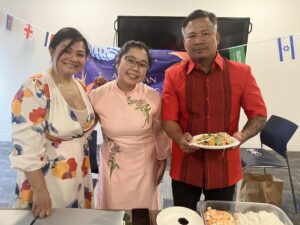
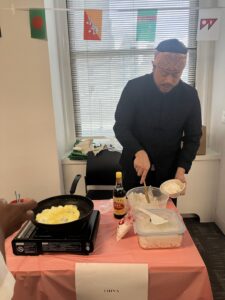
Asian American and Pacific Islander (AAPI) Heritage Month involves learning about, honoring, and recognizing AAPI communities, who bring unique cultures and experiences to the workplace.

In alignment with this year’s theme, “Advancing Leaders Through Innovation”, we are reminded of the rich tapestry of cultures, traditions, and contributions that our AAPI colleagues and communities bring to JEVS.

This month is not just about recognition, but about fostering a deeper understanding and appreciation for the diversity that strengthens our organization. By engaging in activities that celebrate AAPI heritage, we honor these vibrant communities and reinforce our commitments to diversity, equity, inclusion, and well-being (DEIW).

DEIW is essential as we continue to expand our understanding of one another and foster an environment where every individual feels valued, respected, and psychologically safe to bring their full self to work. 

Ways You Can Celebrate AAPI Heritage Month

Celebrating at JEVS Human Services


Want to Stay Connected with JEVS? Sign Up for Our Updates.

Sign Me Up!
Skip to content